
This blog post was prepared by PLOS One Associate Editor Katherine Kokkinias. As telemedicine becomes more ubiquitous in healthcare across the globe…
Environmental change in the Anthropocene
 Warming stripes showing global temperature change (1850-2025) by Ed Hawkins (University of Reading) using UK Met Office Data
This blog post was prepared by PLOS One Senior Editor Joanna Tindall.
The Anthropocene is a geological epoch defined by human actions changing Earth’s processes and ecosystems [1]. This research theme is diverse, encompassing research across the sciences and at varying scales; from the individual species level to global populations and across timescales of decades to hundreds of years. PLOS One authors have been sharing their research on the diverse and varying magnitude of environmental change across the Anthropocene, with the number of publications growing over the last 20 years. Here we highlight some of the research published in PLOS One since 2008 that celebrates the diversity of research happening to understand environmental change in the Anthropocene.
What is changing?
Many publications have focused on the changing ranges and behaviours of particular species. Delzon and colleagues investigated the colonization of the Holm Oak in the Mediterranean between 1880 and 2010, concluding that under projected climate change its range would spread northwards. Crop diversity has changed too, Martin et al.,(2019) found the 1970-80s to be a period where there were substantial increases in taxonomic- and phylogenetic diversity of crops grown almost everywhere, globally.
In the animal kingdom, Huertas et al., (2021) looked into changes in predation on coral reefs. They found that their study site on the Great Barrier Reef, Australia, lost two thirds of its live coral cover between 2008 and 2018, whereas the relative proportion of Porites (hard coral type), tripled. At the same time, predation from parrotfish remained relatively stable. In 2008, Huntley et al., demonstrated that the potential impact of climate change on European birds could result in a rapid, high magnitude, displacement of birds generally northwards. These studies highlight just some of the ways species are adapting to the pressures of a changing environment.
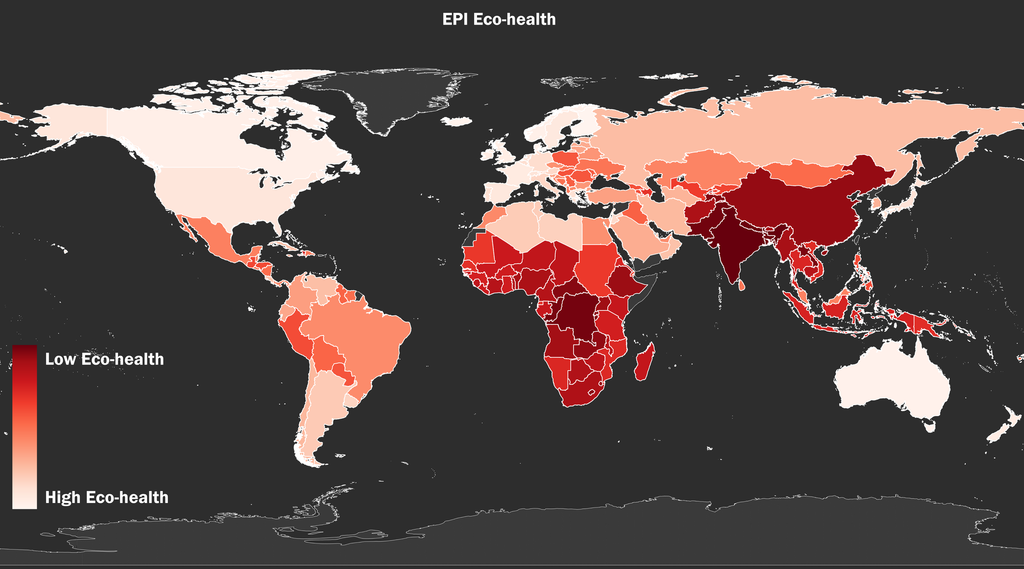
These changes pose risk and impact for people too. In 2021, Marcantonio et al., investigated pollution, climate and health risk in the Anthropocene. Their study showed that low-income countries are faced with higher risks than high-income countries from toxic pollution and climate change. They also proposed a Target assessment tool to assist decision-makers in where best to address pollution, based on the need to minimize human suffering and have maximum impact.
A longer perspective:
Research that looks at changes through time helps in our understanding of the scale and rate of impacts. Pluckhahn and Thulman (2024) used historical records to understand manatee populations in Florida. This revealed that populations were very small in Precolonial and Colonial Periods before their range and number expanded. It is suggested that the expansions follow increasing human populations and the associated landscape, social and policy changes. The study considered what a historical baseline should be and how the human impacts that led to the species expansion, are now those that put it at risk.
Future thinking:
As society comes to learn of the impacts of anthropogenic climate and environmental change, work also focuses on how we can best conserve and adapt to our changing environment. Dempsey (2021) considered the role of rewilding in conservation in the UK by comparing a more traditional nature conservation project and the Knepp Estate rewilding project. The study concluded that rewilding involves reconsidering the amount of human control over a landscape and the work goes on to be discussed in ‘Defining Rewilding for Scotland’s Public Sector’.

This is where larger scale studies are valuable. In Rocha et al’s 2015 work they conducted a comparative analysis of 25 generic types of regime shifts across marine, terrestrial and polar systems to identify their drivers, and impacts on ecosystem services in an attempt to systematically assess the global risk of regime shifts. Whilst they found the interconnectedness of varying regime shifts increased risk of cascading regime shift they also highlighted the opportunity to reduce risk. As regime shift drivers are present at a variety of scales, addressing local or regional regime shift drivers still has the opportunity to reduce the risk of regime shifts even when the reduction in global drivers is absent. Their work goes on to be cited in numerous policy papers that discuss resilience, sustainability and nature economics.
Research on environmental change in the Anthropocene is wide ranging from reporting changing ecologies and species distributions, to discussions on the impact on society, as reflected in the multi-disciplinary work highlighted here. PLOS One research in this area has gone beyond the article, having been discussed in the news and used to inform policy discussions, translating academic research into real world actions.
References
[1] Rocha JC, Peterson GD, Biggs R (2015) Regime Shifts in the Anthropocene: Drivers, Risks, and Resilience. PLoS ONE 10(8): e0134639. https://doi.org/10.1371/journal.pone.0134639
Delzon S, Urli M, Samalens J-C, Lamy J-B, Lischke H, Sin F, et al. (2013) Field Evidence of Colonisation by Holm Oak, at the Northern Margin of Its Distribution Range, during the Anthropocene Period. PLoS ONE 8(11): e80443. https://doi.org/10.1371/journal.pone.0080443
Martin AR, Cadotte MW, Isaac ME, Milla R, Vile D, Violle C (2019) Regional and global shifts in crop diversity through the Anthropocene. PLoS ONE 14(2): e0209788. https://doi.org/10.1371/journal.pone.0209788
Huertas V, Morais RA, Bonaldo RM, Bellwood DR (2021) Parrotfish corallivory on stress-tolerant corals in the Anthropocene. PLoS ONE 16(9): e0250725. https://doi.org/10.1371/journal.pone.0250725
Huntley B, Collingham YC, Willis SG, Green RE (2008) Potential Impacts of Climatic Change on European Breeding Birds. PLoS ONE 3(1): e1439. https://doi.org/10.1371/journal.pone.0001439
Marcantonio R, Javeline D, Field S, Fuentes A (2021) Global distribution and coincidence of pollution, climate impacts, and health risk in the Anthropocene. PLoS ONE 16(7): e0254060. https://doi.org/10.1371/journal.pone.0254060
Pluckhahn TJ, Thulman DK (2024) Historical ecology reveals the “surprising” direction and extent of shifting baselines for the Florida manatee (Trichechus manatus latirostis). PLoS ONE 19(11): e0313070. https://doi.org/10.1371/journal.pone.0313070
Dempsey B (2021) Everything under control? Comparing Knepp Estate rewilding project with ‘traditional’ nature conservation. PLoS ONE 16(6): e0241160. https://doi.org/10.1371/journal.pone.0241160
Waylen, K.A. and Marshall, A. (2023) Defining Rewilding for Scotland’s Public
Sector. Scottish Government Riaghaltas na h-Alba. https://www.gov.scot/publications/defining-rewilding-scotlands-public-sector/documents/