
This interview and blog post was prepared by PLOS One Associate Editor Daniel Parkes. Issa Atoum is an Associate Professor in the…
Editorial Spotlight: Srebrenka Letina
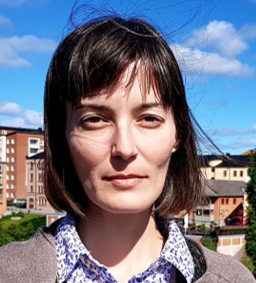
This interview and blog post was prepared by PLOS One Senior Editor Annesha Sil.
Srebrenka Letina holds two PhDs, in Psychology and Network Science. She is currently an Assistant Professor in the Department of Psychology at the University of Limerick (Ireland) and an Honorary Research Fellow at the University of Glasgow (UK). Previously, she worked at academic institutions in Sweden, Hungary, and Croatia, and was a research visitor at the University of Melbourne (Australia) and the University of Amsterdam (the Netherlands). Her research sits at the intersection of psychology and network science, that is social sciences and computational and data science. She is involved in several interdisciplinary projects that integrate social network data, psychometric and health data, and population-based register data. In addition to her research, she teaches social network analysis and advanced quantitative methods, with a focus on applying innovative analytical approaches to complex social and behavioural phenomena.
In this post, she shares her work applying network science to psychology and health behaviours, explains how her research contributes to addressing today’s challenges, and describes her approach to ensuring objectivity and fairness in the peer review process.
Challenges such as pandemics, mental health crises, and social fragmentation are inherently relational and systemic — they spread and persist through networks of people, institutions, and ideas. This is why I believe that understanding social connectivity and associations between ideas (such as identity structures) is central to tackling them.
Given your work applying network science to psychology and health behaviours, what most excites you about this field and where do you see it heading in the next five years?
What excites me most is the integrative potential of network science (including data science and computational methods) and psychology — the way their combination allows us to bridge micro-level psychological processes with meso- and macro-level social dynamics. In the study of health behaviours (but also other individual behaviours and outcomes), this means moving beyond individual-level explanations to understanding how and why behaviours, emotions, and norms spread through social structures. In this sense, neglecting social network information, as psychologists often still do, means overlooking a fundamental part of the puzzle.
I’m particularly enthusiastic about the increasing use of longitudinal and multilayer network models that capture dynamic feedback between individuals and their social environments. These approaches allow us to examine not only what predicts behaviour but how relationships themselves evolve as part of that process (e.g., stochastic actor-oriented models). My own work has focused on precisely this — modelling positive and negative social ties to understand mechanisms like social influence in different contexts.
That said, this type of research remains demanding — from data collection to computational modelling and interdisciplinary collaboration. But I believe that the next five years will bring greater methodological integration and accessibility. We’ll see a shift from exploratory uses of network models — particularly in psychological network analysis — toward more theoretically grounded frameworks. Furthermore, I think we will see more integration with other methods within the computational social science, such as agent-based modelling and machine learning. More prevalent use of those theoretical frameworks and methods will, I think, will eventually help us move toward truly relevant research in social sciences in general.
Globally, we are living in a time of increasing challenges – whether it is pandemics, mental health crises, or social fragmentation. How do you see your research in network science and psychology contributing meaningfully to addressing these challenges?
Challenges such as pandemics, mental health crises, and social fragmentation are inherently relational and systemic — they spread and persist through networks of people, institutions, and ideas. This is why I believe that understanding social connectivity and associations between ideas (such as identity structures) is central to tackling them.
For example, in studies of adolescent friendship networks, I examine how social networks are associated with health behaviours and mental health. During crises such as pandemics, similar mechanisms operate at a larger scale — misinformation, trust, and social norms all diffuse through social ties.
Ultimately, I see network-based (often also implying highly computational) transdisciplinary approaches as offering both theoretical insight and practical leverage: they help identify leverage points for interventions, reveal vulnerabilities in social systems, and inform the design of strategies that build resilience through connection rather than treating individuals as isolated entities.
As an Academic Editor for PLOS One, how do you ensure objectivity and fairness in the peer review process, especially in interdisciplinary fields like yours? When assessing submissions, how much weight do you place on transparency in the methods, data, and overall research process?
Ensuring objectivity and fairness in peer review, particularly in interdisciplinary fields, is both essential and challenging. The scope of relevant literature and methodological traditions is naturally broader, and reviewers often need to be from distinct disciplinary communities. My approach is to be explicit about what constitutes a fair and constructive review in such contexts: I emphasise the importance of methodological soundness, but with high standards for clarity of reasoning, and I value transparency over disciplinary conformity or novelty alone. However, I think that willingness to engage with and potentially integrate literature and methods from different fields should be especially appreciated. The reason for such work being highly valued comes from the higher effort it inherently requires, and higher potential it holds for new, ground-braking and creative ideas.
Transparency in methods and data is, for me, non-negotiable. Open materials, reproducible code, and clear reporting standards are vital for cumulative science. But equally important — and often overlooked — is theoretical transparency: authors should clearly articulate how their research questions derive from existing frameworks in their own and adjacent disciplines, and how their findings contribute to theory-building across fields.
In my experience, this balance between methodological rigour and theoretical openness is key to fairness. It allows genuinely interdisciplinary work — whether it combines psychology and network science, or theory and computation — to be evaluated on its own terms while maintaining the standards of scientific integrity that PLOS One hopes to uphold.
Disclaimer: Views expressed by contributors are solely those of individual contributors, and not necessarily those of PLOS.
Editor Spotlight series features engaged and dedicated PLOS One Editorial Board members who facilitate excellent peer review processes. If you’d like to be considered for the series, please fill out the interest form.