
Yasser F. Hendawy Al-Mahdy is Professor of Educational Administration and Leadership at the Faculty of Education, Ain Shams University, Egypt. He previously…
Editorial Spotlight: Carlos Carrasco
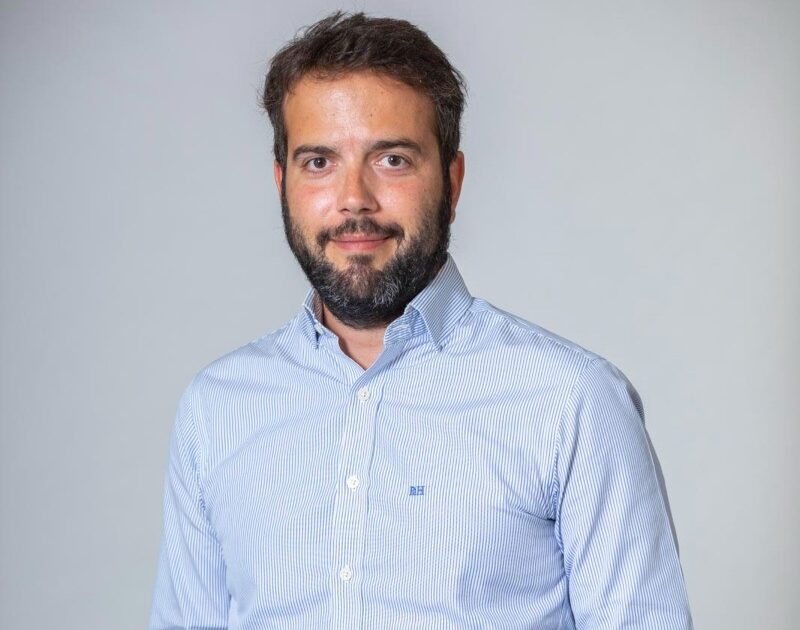
Carlos Carrasco-Farré is an Assistant Professor in the Department of Data, Analytics, Technology, and AI at ESADE Business School. His research spans computational social science, AI governance, and organizational theory, examining how algorithmic systems reshape institutions, markets, and scientific practice. He completed his PhD at ESADE, where he received the Ramon Llull Extraordinary Doctoral Award, and serves as an Academic Editor at PLOS One.
My advice is to treat AI as a tool that can support judgment but never substitute for it. The value an editor or reviewer brings is accountability, a person willing to stand behind an assessment.
Your research lies at the intersection of technology and societal challenges. What draws you to this field?
What draws me to this space is that the most consequential questions about technology are rarely technical. They are questions about institutions, incentives, and behavior. My research sits in computational social science and spans AI governance, LLM behavior, platform dynamics, and organizational theory, and the common thread is trying to understand how algorithmic systems reshape the social structures they are embedded in, often in ways their designers never intended.
Concretely, that has meant studying things like how generative AI may shift the stratification of science itself, how misinformation gains persuasive power precisely when it contains authentic fragments of truth, and how large language models behave when placed in evaluative roles that carry real consequences for people. These are problems where you cannot make progress from a purely engineering perspective or a purely social science perspective. You need both, and that intersection is where I find the work most alive.
As a PLOS One Academic Editor, you provide thorough feedback to authors in your decision letters. What is your approach to evaluating manuscripts and crafting those decisions?
My guiding principle is that a decision letter should be useful to the authors regardless of the outcome. PLOS One‘s model, which centers on soundness rather than perceived novelty or importance, makes this easier in some ways: my job is to assess whether the claims are supported by the evidence, whether the methods are adequate and transparently reported, and whether the inferential leaps are earned. So I try to be diagnostic rather than evaluative in tone. Instead of saying an analysis is unconvincing, I try to say exactly why and what evidence or robustness check would change my mind.
I also try to be honest about severity. Not every concern is fatal, and I think it helps authors enormously when an editor clearly distinguishes among issues that must be resolved, issues that would strengthen the paper, and issues that are matters of taste. As an author with my own share of revision experiences, I know how demoralizing a vague or internally contradictory decision letter can be. I would rather write a longer, more direct letter that gives authors a clear path forward than a polite one that leaves them guessing.
What are the challenges editors face around the use of AI in peer review? What is your advice to them?
This question sits close to my own research. One of my current projects examines whether large language models act as fairer judges in peer review or whether they reproduce and even amplify status biases, the Matthew Effect, where established names receive more favorable evaluations. Based on this, I see two challenges for editors. First, detection: AI-assisted or AI-generated reviews are increasingly difficult to identify, and detection tools are unreliable. Second, calibration: AI-generated feedback tends to sound authoritative and comprehensive, yet sometimes misses what actually matters in a paper or, worse, fabricates concerns.
My advice is to treat AI as a tool that can support judgment but never substitute for it. The value an editor or reviewer brings is accountability, a person willing to stand behind an assessment. I would also encourage editors to be transparent with their communities about what uses of AI are acceptable and which are not, because ambiguity is where most problems start. And finally, stay curious rather than defensive. These tools will keep improving, and the editors best positioned to protect the integrity of the review are those who understand what the technology can and cannot do.
Disclaimer: Views expressed by contributors are solely those of individual contributors, and not necessarily those of PLOS.
Editor Spotlight series features engaged and dedicated PLOS One Editorial Board members who facilitate excellent peer review processes. If you’d like to be considered for the series, please fill out the interest form.