
PLOS One Senior staff editor Avanti Dey attended the American Psychological Association (APA) annual convention over three days in August 2026 at…
Curiosity Driven Research at EACR 2025
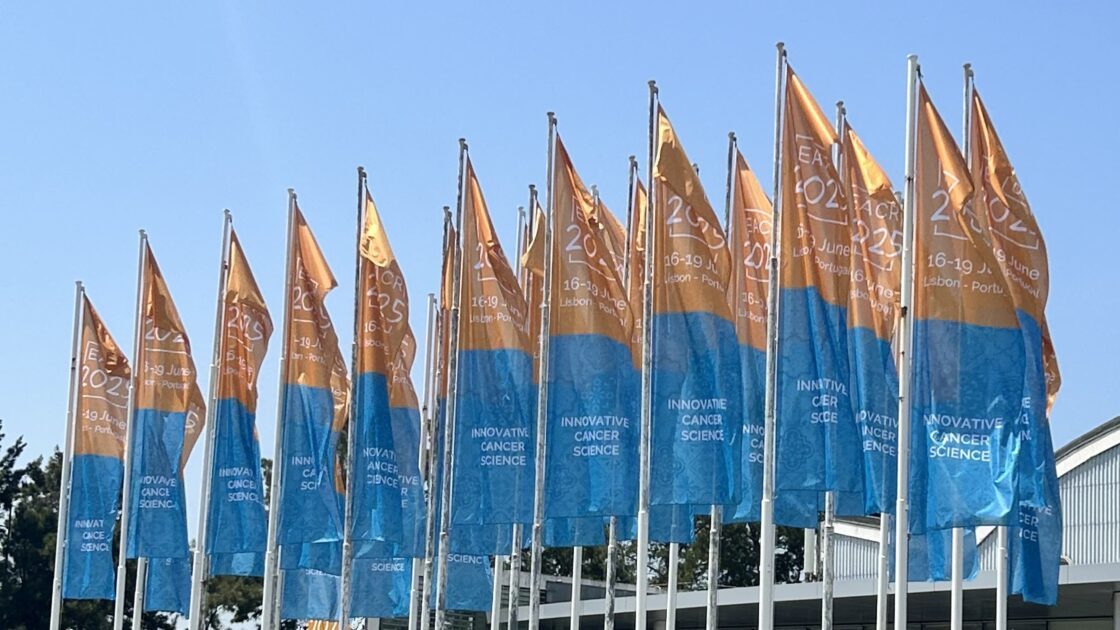
PLOS One staff editor Jenny Tucker traveled to Lisbon in June 2025 for the European Association for Cancer Research (EACR) Congress, which brought together the global cancer research community to discuss important research progress across the field, including understanding clonal expansion in cancer, novel treatment and detection approaches, inflammation and the immune role in disease progression, and control of metastatic disease.
With over 1700 abstracts, EACR showcased scientific excellence from researchers who share the goal of accelerating progress against cancer. The scientific programme included high impact keynote lectures, symposia, poster sessions, early career scientist forums and dedicated industry workshops on new technologies, alongside an evening networking session to encourage discussions between attendees. Over 60 countries were represented at the event, which supported crosstalk between academics, clinicians and industry professionals, to share the latest advances in fundamental, translational, and preclinical cancer research. The event also hosted an extensive exhibition from almost 120 vendors, spanning from contract research organizations and biotechnology companies to gene editing and model development outsource companies, to support research and display new technologies for the advancement of scientific research.
The opening keynote address on inflammation driven lung cancer initiation and progression from Charles Swanton kicked off the theme of inflammation and immunity’s role in cancer development which threaded through a number of sessions throughout the conference. His research focuses on the role of air pollution in lung cancer risk, challenging the classic somatic mutation assumption of environmental carcinogens’ role in driving cancer development, and presenting evidence that PM2.5 may drive an epigenetic switch which converges in the development of lung adenocarcinoma. Utilizing the driver-promoter model of cancer, Swanton and colleagues demonstrate AT2 cells’ vulnerability to PM2.5 as a lung cancer driver, through macrophage-driven chronic inflammation, with IL1β implicated in pathogenesis. Although anti-IL1β fails to impact established lung cancer, it may hold promise as a potential preventative treatment for individuals at high risk of developing the disease. Identification and validation of AT2-cell specific plasma proteins in a large UK Biobank cohort demonstrates potential for risk stratification in blood samples, which may allow earlier detection and intervention for improved prognosis. The role of inflammation in other cancers was discussed in other sessions throughout EACR, and raises important questions for future research, to improve understanding of risk and identification of individuals who might benefit from additional screening.

Dana Pe’er’s keynote lecture on the role of plasticity in tissue remodelling and tumor progression was impactful, insightful and provided comment on some of the challenges which the cancer research field is facing at present. Plasticity is a hallmark of cancer and a foundation of tumors’ adaptive ability, with different levels of plasticity demonstrated across different cancers. In pancreatic ductal adenocarcinoma (PDAC), the most common pancreatic cancer which has a poor survival prognosis, greater cellular plasticity is demonstrated, alongside enhanced intercellular communication. These unique cellular behaviors have been attributed to oncogenic KRAS mutations impacting chromatin remodelling and epigenetic modulation of plasticity; inhibition of KRAS reduced progenitor cell frequency and disrupted remodelling to interfere with plasticity in cellular models. Drug resistance in prostate cancer has also been linked to cell intrinsic plasticity, with mutant cells shifting to neuroendocrine lineage which requires a phenotype loop to facilitate abrupt switching of cells in disease. Plasticity can be a major challenge in cancer, so improving our understanding of these cellular switches will improve future treatment approaches which can inhibit or interfere with these changes. The talk also cautioned against publication of correlation-based research in oncology, as the field has seen an increase in unvalidated association studies in the literature, for which PLOS One has developed additional guidance to ensure our publications include robust scientific validation to support conclusions.
Awesome power of plasticity
– Dana Pe’er
A number of sessions discussed brain tumors, both primary cancers of the brain, such as gliomas, and brain metastases, particularly from breast cancer, prostate cancer, lung cancer and melanoma. These sessions explored the metastatic control of primary cancers to the brain, with focus on the role of the tumor microenvironment in modulating these metastases; novel strategies to target brain tumors, including differential treatment responses in symptomatic and non-symptomatic patients; and creation of an encyclopedia of normal and abnormal pediatric brains (PEDIA-Brain) to improve understanding of diffuse midline glioma development and identify spatiotemporal susceptabilities to disease. Johanna Joyce explored exploitation of the brain tumor microenvironment to understand the impact of the primary tumor on the function of brain metastases, including how metastasis may utilize the “immune privilege of the brain” to resist immune-based therapies.
Eileen White’s keynote lecture on cancer metabolism linked into survivorship and quality of life. With the development of novel cancer cachexia murine models, Ras has been identified as a key oncogenic activator in cachexia, which results in gross weight loss and patient weakness as a result of improper responses to food intake and metabolic balance; in PDAC cachexia, reduced serotonin results from tryptophan metabolism crisis, providing a biological basis for cancer-associated depression. In this patient group, Prozac was able to rescue food intake and activity. Although this intervention doesn’t alter the overall prognosis for fat loss and mortality, it demonstrates a valuable approach to improving patient wellbeing and quality of life.

Cancer genetics, genomics, and AI application in oncology research also threaded through many talks. Cancer genomics sessions included discussion of epigenetic regulation of disease, pre-malignant changes, and anuploidy in cancer risk. Carlos Caldos’s final keynote highlighted the importance of genetically differentiating between cancer subtypes, such as the 100+ breast cancer variants, in order to distinguish the unique drivers of disease and distinct characteristics of the tumor ecosystems, which all respond differently to treatments. AI use was highlighted in a standout talk from Francesca Buffa, which highlighted a PLOS Computational Biology paper discussing agent-based modelling of gene networks to simulate the tumor microenvironment ecosystem to model the effects of external gene or gene-network perturbations on clonal competition, expansion, and metabolic control of cell growth.

In a special lecture on the final day of sessions, Manuel Heitor stepped away from the research itself and discussed the future of European Cancer research, the need to address systemic challenges, such as funding, job stability, and poor support for early career researchers. It highlighted a need to shift the paradigm to address translational research needs, despite the challenges which this brings for policy making, the need to balance technological change with established research practices, and to combat the exponential growth in publications which can result in poor quality research papers diluting the pool of quality research on which future projects should build. The challenge of equitable access to treatments was raised, with geographic determinants of treatment options and funding for novel trials, and the need to incentivise early career researchers to stay in Europe, where they are currently lost to roles elsewhere due to increased investment.
Support of open science practices and research dissemination was evident throughout the congress, with the establishment of research networks (such as RENACER in Spain), use of preprint servers (particularly BioXriv and ChemXriv), data sharing and development of open resources, such as Brain TIME and PEDIA Brain. These approaches to scientific data sharing and collaboration, alongside publication of findings in open access journals, can support the rapid dissemination of findings for rapid progression of research.
Overall, EACR’s commitment to innovation, diversity, equity and openness in sharing science to advance our understanding and approach to cancer was evident: from diagnostics and pre-pathological treatments, to novel treatments and disentangling the interplay of factors in the disease progression. Next year’s EACR Congress will be hosted in Budapest, Hungary in June 2026.