
Posted on behalf of PLOS One’s Life Sciences Division Editor Patrick Goymer The American Society of Agronomy (ASA), Crop Science Society of…
From long-term field studies to wild microbiomes: themes from Evolution x Ecology 2026

Image: Conference photo courtesy of Erik Postma (University of Exeter)
This blog was written by PLOS One Associate Editor Sarah Jose, who attended Evolution x Ecology 2026.
Evolution x Ecology 2026, held at the University of Exeter’s Penryn Campus in Cornwall, UK, brought together researchers working across the interface of evolutionary biology and ecology for a week of talks, posters, workshops, and community-building discussions. PLOS was delighted to sponsor the meeting, and PLOS One Associate Editor Sarah Jose attended to connect with the evolutionary ecology community and learn more about emerging research in the field.
Throughout the conference, it was clear that understanding evolution and ecology in natural systems increasingly depends on collaboration, long-running datasets, methodological openness, and research that can be built upon over time. These priorities strongly resonate with PLOS’ commitments to open science and to supporting rigorous accessible research.
A new meeting for the evolutionary ecology community
Evolution x Ecology 2026 was designed as a focussed space for researchers working at the eco-evolutionary interface, welcoming 230 participants from 25 countries and creating fantastic opportunities for researchers at different career stages to share ideas and build connections.
The breadth of the programme reflected the diversity of evolutionary ecology today. Talks and posters spanned wild animal microbiomes, host–parasite dynamics, ageing, sociality, behavioural ecology, climate change, conservation, genetics, epigenetics, and the ecological processes that shape evolutionary change.
The power of long-term studies
Many presentations highlighted the extraordinary value of long-term population studies. Research drawing on decades of data from wild populations showed how repeated measurements, archived samples, and careful field observations can reveal patterns that would otherwise remain hidden. Long-running projects like the Wytham Tit Project in Oxfordshire (UK), the Soay Sheep project on St. Kilda (UK), the rhesus macaques project in Cayo Santiago (Puerto Rico), and the Tsaobis Baboon Project (Namibia) enable researchers to ask how genes, behaviour, environment, demographics, and selection interact across generations, and how ecological change shapes evolutionary trajectories over time.
These studies also demonstrated the lasting value of preserving data and samples for future use. Methods that were unavailable when some projects began are now allowing researchers to return to historical material with new questions, generating fresh insights into ageing, immunity, microbiomes, behaviour, and adaptation in natural populations.
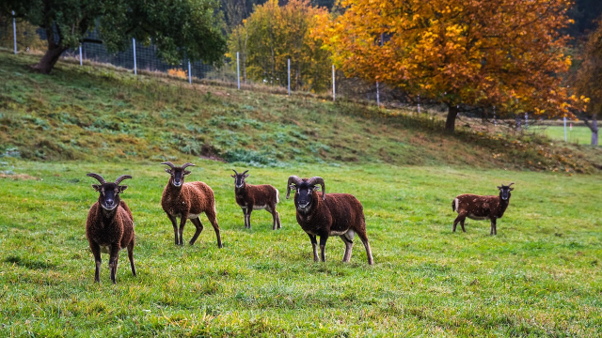
Image: The Soay Sheep population in the St. Kilda archipelago, Scotland, UK, has been studied in detail for 41 years, giving great insights into aging, population dynamics, and the microbiome. Image credit: Tommy Rau. https://pixabay.com/images/download/tommy_rau-soay-sheep-7176565_1920.jpg
Evolution in a changing world
Climate change and environmental variability were central to many discussions. Speakers explored whether natural populations might adapt quickly enough to warming temperatures and changing ecological conditions, and how phenotypic plasticity, genetic variation, and conservation interventions may influence future outcomes.
Several talks emphasised that evolutionary and ecological responses rarely occur in isolation. Temperature, habitat, species interactions, pathogens, behaviour, and life history can all shape how organisms respond to change. This complexity makes integrative approaches essential, particularly for conservation questions where ecological urgency and evolutionary uncertainty often intersect.
Host–parasite dynamics, immunity, and ageing
Another recurring theme was the dynamic relationship between hosts, parasites, and immune systems. Presentations showed how host and pathogen populations can change together over time, with adaptive traits emerging, declining, or shifting as ecological conditions change. These eco-evolutionary feedbacks are especially powerful in wild systems, where selection pressures vary across seasons, years, and environments.
Ageing was also a prominent topic, including how senescence evolves in wild animals and how ageing can affect physiology, immunity, and fitness. Together, these sessions underscored the importance of studying organisms across their full lives and in the ecological contexts in which selection acts.

Image: Evolution x Ecology was held at the University of Exeter’s Penryn Campus in Cornwall, UK. Image credit: Sarah Jose.
Wild microbiomes and the holobiont
Wild animal microbiomes were strongly represented across the meeting, including in a dedicated pre-conference workshop on wild animal microbiome ecology and evolution. Discussions considered how microbiomes assemble, how they vary across individuals and environments, how they may influence host phenotypes, and how hosts and microbiomes might shape one another over evolutionary time.
The workshop also highlighted the methodological challenges of studying microbiomes in wild systems. Questions about causality, environmental variation, and scale are difficult to answer, but the field is advancing rapidly as researchers combine field ecology, molecular methods, comparative approaches, and evolutionary thinking.
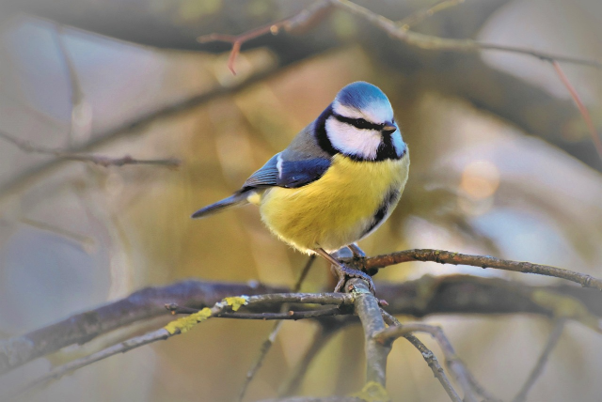
Image: Blue tits in Wytham Woods, Oxfordshire, UK, are studied to answer questions about ageing, the genetics of behaviour, and the ecology of timing breeding in the spring. Image credit: Ralphs Fotos. https://pixabay.com/photos/blue-tit-songbird-bird-small-bird-4792149/
Behaviour, sociality, and ecological niches
Behavioural ecology was another major thread, with talks on traits such as exploration, aggression, migration, breeding phenology, co-operation, and sociality. Several presentations examined the genetic, epigenetic, and environmental drivers of behaviour, as well as the costs and benefits of social living.
Research on ecological niches also emphasised the need to move beyond single variables and consider multidimensional environments. Understanding specialisation, adaptation, and ecological opportunity requires attention to the many interacting factors that shape organisms’ lives.
Open science as shared infrastructure
From a PLOS perspective, one of the most striking aspects of the meeting was how naturally open science sat within the research culture of the community. Many studies depended on shared datasets, reusable code, archived samples, long-term collaborations, and transparent methods. These practices are not simply desirable additions to the research process; for many eco-evolutionary questions, they are essential infrastructure.
Open approaches allow researchers to build on work conducted across decades, compare findings across systems, and generate new insights as analytical methods develop. They also support reproducibility, visibility, and collaboration across disciplines and borders. These values are central to PLOS’ mission, and it was encouraging to see them reflected so strongly throughout the conference.
We were also pleased to share more about PLOS Ecosystems, which is now open for submissions and particularly relevant to many of the themes discussed at the conference.
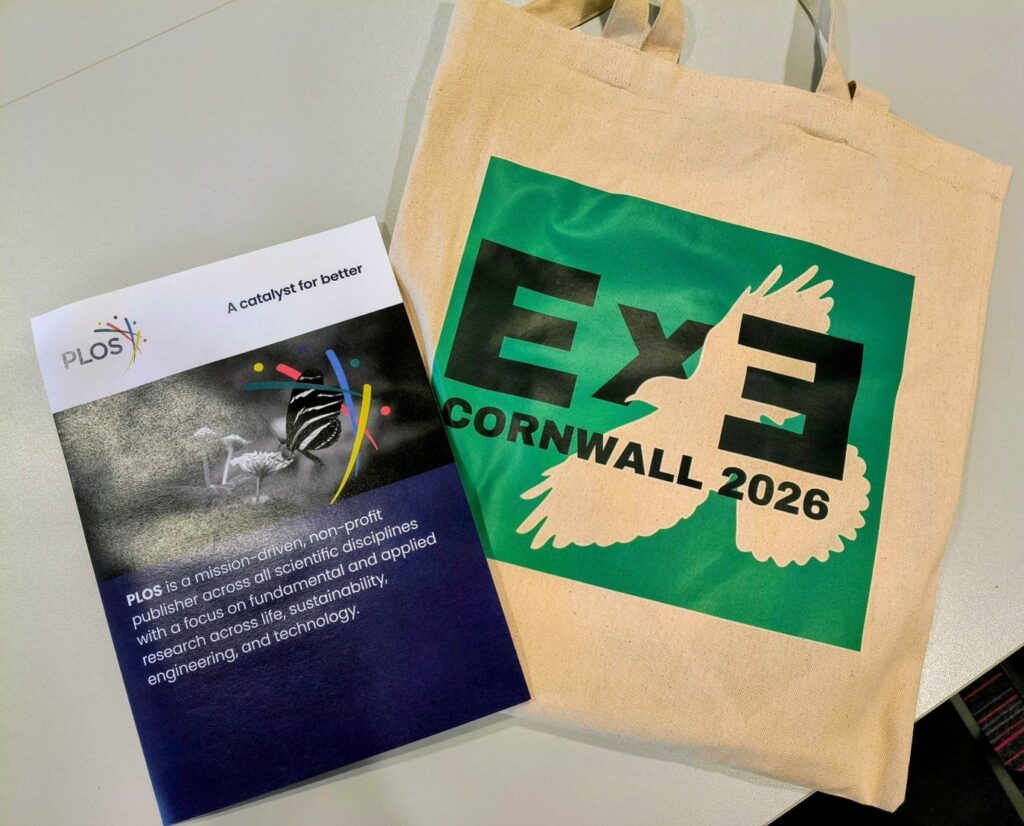
Image: PLOS was a proud sponsor of the Evolution x Ecology 2026 meeting. Image credit: Sarah Jose.
Building momentum for the future
Beyond the talks and posters, Evolution x Ecology 2026 created space for the community to consider its future. Workshops explored emerging research questions, interdisciplinary networks, publication and open science practices, quantitative genetics, behavioural analysis, and the formation of a new evolutionary ecology group. These activities reflected a community that is not only producing exciting science, but also thinking carefully about how to support collaboration, training, and shared priorities.
PLOS was proud to support Evolution x Ecology 2026 and grateful to the organisers, speakers, poster presenters, and attendees for such a thoughtful and engaging meeting. We look forward to continuing conversations with researchers working across evolution and ecology, and to supporting open and rigorous research that helps illuminate how life responds to ecological change.